
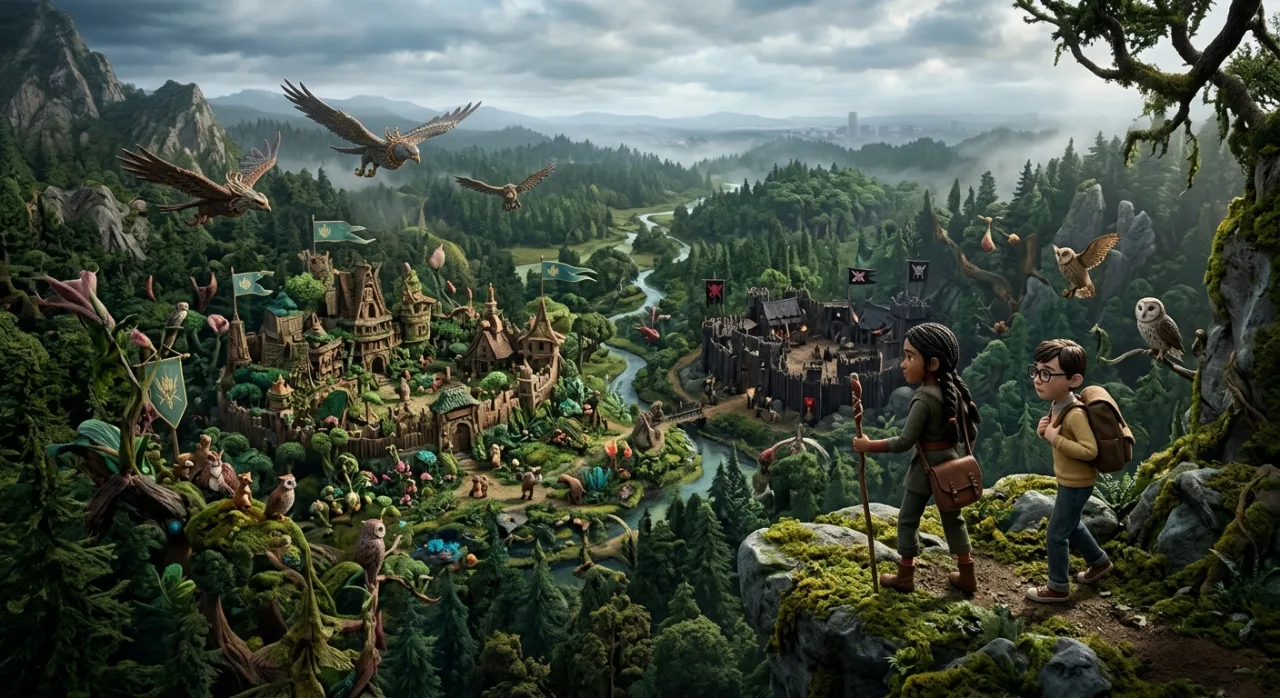
 LAIKA’s adaptation of Wildwood stands as a breathtaking testament to physical animation. Directed by Travis Knight and written by Chris Butler, the film adapts Colin Meloy and Carson Ellis’s acclaimed novel into a visceral, dark, and visually captivating spectacle. Beyond its technical achievements, Wildwood balances high-stakes fantasy with grounded emotional tragedy, delivering one of the most ambitious stop-motion projects in recent years.
At a Glance: Key Review Takeaways
| Feature | Assessment | Details |
| Visuals & Animation | Outstanding | Exceptional physical puppetry, expansive vistas, and tactile scale. |
| Pacing & Plotting | Mixed | Rich in mythology, but overstuffed with dense exposition and fast quest beats. |
| Character Depth | High | Compelling, tragic villain; authentic and relatable adolescent protagonists. |
| Tone | Dark & Mature | Explores grief, betrayal, and consequence with surprising visceral intensity. |
A World Built with Tactile Precision
Wildwood feels like a living, breathing realm. Set in an enchanted forest known as the Impassable Wilderness, the narrative begins when Portland teenager Prue McKeel disobeys her parents and takes her baby brother, Mac, outside. A murder of crows swoops down and abducts Mac, forcing Prue and her clumsy classmate Curtis Mehlberg to cross into a strictly off-limits woodland.
The visual execution is striking across all scales:
-
Elaborate Puppetry: Every creature—from noble golden eagles to gritty coyote commanders exhibits distinct personality and weight.
-
Environmental Detail: Unique architecture, lush flora, and vast wilderness vistas ground the viewer directly inside the forest.
-
Grand Scale: Massive bird aerials and large-scale faction battles highlight the astounding patience and precision required by the animation team.
A Darker, Unforgiving Fairytale
Unlike conventional animated features, Wildwood intentionally avoids feeling like a safe haven. The stop-motion medium lends a visceral quality to the narrative’s darker turns, which feature genuine stakes, destruction, and tragic history.
Key Narrative Themes:
├── Complex Grief & Betrayal (Alexandra & Prue’s Parents)
├── Loss of Innocence & Maturation (Prue & Curtis)
└── Factional Warfare & Political Intrigue (South Wood vs. Bandits)
Alexandra: A Standout Antagonist
The emotional core of the conflict rests on Alexandra, the former ruler of South Wood. Driven mad by grief over her son Alexei’s death, she resorted to dark magic to bind him to a mechanical body a desperate act that ended in further tragedy. Alexandra remains a terrifying yet deeply tragic figure whose motivations, though horrific, stem from an entirely understandable maternal loss.
Maturation Through Crisis
Prue’s journey mirrors this emotional weight. Her initial frantic rescue mission evolves into a sobering realization that adults make deeply flawed choices especially after discovering her own parents made a secret deal with Alexandra. Opposite her, Curtis provides a welcome counterbalance with his clumsy, loyal determination, keeping the central friendship grounded and easy to root for.
World-Building vs. Narrative Pacing
Despite its visual mastery, the story occasionally falters under its own ambitious lore.
-
Dense Exposition: The script juggles complex backstories, political dynamics between bandits and rulers, magic systems, and shifting alliances.
-
Predictable Structure: The overall plot adheres closely to standard rescue-quest milestones, making key story beats predictable.
-
Rushed Climax: While the final spectacle showcases Prue’s connection to the forest, the breakneck pace of the third act leaves several secondary character arcs underexplored.
Final Verdict
Wildwood is a magnificent achievement in stop-motion animation. While the narrative occasionally struggles to balance its dense political lore with its pacing, the film excels in atmosphere, emotional maturity, and physical craftsmanship. It remains an extraordinary showcase of human creativity and dedication in modern cinema.