
 Two couples booked the exact same week in the exact same African reserve. The first pair came home talking about a solitary lion and the eleven rumbling vehicles packed around it, exhaust fumes drifting as zoom lenses clattered against their heads.
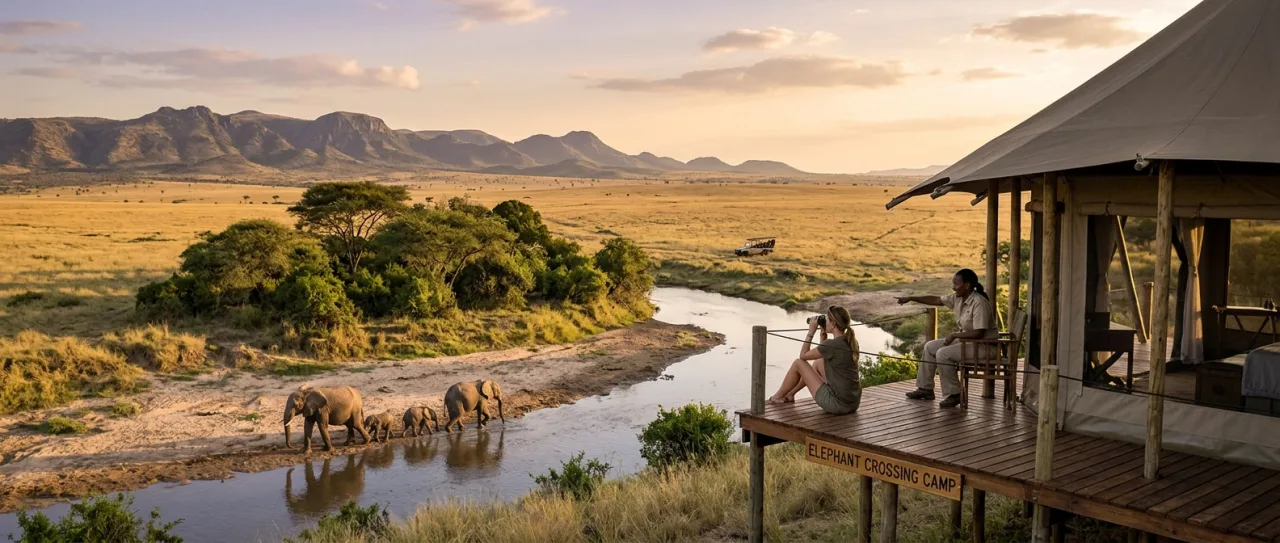
The second couple watched a river at dusk. Their guide cut the engine, and a breeding herd of forty elephants waded across the water just yards away. No other cars appeared. They sat in pure silence for nearly an hour.
It is easy to attribute that difference to sheer luck, but it rarely is. Travelers seeking truly unique African excursions discover that these moments are engineered months in advance through deliberate choices about where to stay, when to travel, and how to move.
Understanding how a wilderness journey is designed transforms a generic vacation into a deeply personal expedition.
Crowds Are a Planning Problem, Not a Wildlife Issue
The animals do not change based on who books the trip. What changes is the density of people watching them.
Public national parks offer immense beauty, but a single predator sighting on a main road quickly turns into a traffic gridlock. Private conservancies operate under entirely different principles. They strictly limit the number of vehicles permitted at any sighting and offer exclusive activities prohibited in public grounds, such as off-road tracking, guided walking safaris, and night drives.
Lodge size plays a crucial role in shaping your day-to-day experience:
-
Lower Guest Counts: Fewer rooms automatically mean fewer safari vehicles setting out each morning.
-
Unscripted Expertise: Guides have the bandwidth for meaningful conversations rather than rehearsed scripts.
-
Flexible Tracking: Drives can follow fresh tracks in real time instead of sticking to a rigid loop.
Selecting an intimate bush camp establishes a deliberate pace. Instead of rushing to keep up with a crowded hotel schedule, you adapt entirely to the natural rhythm of the ecosystem.
Alignment: Choosing the Right Month for Your Goals
Africa is a year-round destination, but every region follows its own environmental calendar. Picking the country first and the dates second is one of the most common mistakes travelers make.
| Travel Season | Environmental Conditions | Best Suited For |
| Dry Season | Sparse vegetation, animals gather around remaining water sources. | Predictable wildlife sightings and high predator action. |
| Green (Wet) Season | Lush landscapes, newborn animals, vibrant migratory bird life, fewer visitors. | Photographers seeking soft light and dramatic scenery. |
Seasonal shifts directly dictate predator movements, bird nesting cycles, and foliage density. Aligning your personal interests with the regional micro-climate guarantees that reality matches your expectations on the ground.
Seamless Travel Days: The Logistics Behind the Experience
A typical safari morning might start with a 6:00 AM game drive, followed by a bumpy transfer to a dirt airstrip, a light aircraft flight across a mountain range, and a cross-border customs check before dinner.
Each step is straightforward on its own, but stitching them together without proper oversight leads to unnecessary friction.
[ Early Morning Game Drive ]
          │
          ▼
[ Remote Airstrip Transfer ] ────────► (Strict Soft-Bag Weight Limits)
          │
          ▼
[ Bush Plane Charter Flight ]
          │
          ▼
[ Border / Customs Crossing ] ───────► (Requires On-Site Meet & Assist)
          │
          ▼
[ Afternoon Lodge Arrival ]
To prevent logistics from overwhelming your trip, keep three critical factors in mind:
-
Luggage Restrictions: Light aircraft enforce strict weight limits and require soft-sided duffel bags.
-
Schedule Alignment: Park gate operating hours must align with lodge check-in times.
-
Border Assistance: Navigating remote border posts goes smoothly when dedicated ground operators manage the paperwork.
Utilizing dedicated meet-and-assist support at each transfer point transforms a potentially stressful travel day into a comfortable transition, maximizing your actual time spent in the bush.
Defining True Luxury in the Wilderness
While private plunge pools and high-end amenities are welcome treats after a dusty afternoon drive, they do not define a world-class safari.
Ask experienced safari-goers what made a trip unforgettable, and they will point to elements beyond the room itself:
-
Master Trackers and Guides: Professionals who have worked the same territory for decades and recognize individual animal territories.
-
Unrushed Schedules: Private meals set up in the bush without a clock ticking down the next activity.
-
Tailored Dynamics: Family-focused lodges with specialized kids’ programs, or private vehicles reserved exclusively for dedicated photography goals.
True exclusivity comes down to personal freedom and uninterrupted quiet. When your daily itinerary is customized around your preferences, every morning becomes an open canvas rather than a rigid checklist.
Conservation and Local Impact
Thoughtful travel leaves a positive footprint. The top operators invest directly in the communities and ecosystems that make these experiences possible. Choosing lodges that employ local guides, trackers, and support staff protects critical wildlife corridors and sustains regional economies.
When you strip away the crowds, the rigid schedules, and the logistical friction, you are left with pure immersion in nature the kind of quiet, unforgettable moment that stays with you long after the journey ends.